
Buying or selling a property is a major decision, and most people start their search online. Before contacting a real estate agent, potential buyers and sellers often visit their website to explore property listings, understand available services, and learn more about the agent’s experience. This makes your website much more than an online business card. It is an important platform for showcasing properties, building credibility, connecting with potential clients, and generating new business opportunities.
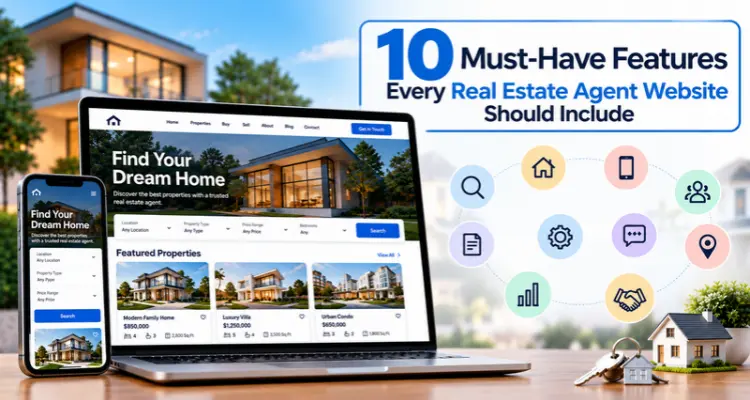
However, simply having a website is not enough. A successful real estate agent website should offer a smooth browsing experience, provide useful property information, and make it easy for visitors to get in touch.
Whether you are an independent real estate agent, a property consultant, or a growing real estate agency, choosing the right website features can make a significant difference in how potential clients interact with your business.
In this guide, we will explore 10 must-have features every real estate agent website should include to create a professional online presence, improve user experience, and turn website visitors into potential clients.
10 Essential Features Every Real Estate Agent Website Should Have
1. User-Friendly Website Design and Easy Navigation
First impressions matter, especially when someone is looking for a real estate agent to help them buy or sell a property. If your website looks outdated, feels cluttered, or makes it difficult to find information, visitors may leave before exploring your services.
A clean, professional, and easy-to-navigate design helps visitors find what they need without unnecessary effort.
Your real estate website should include:
- A clear navigation menu with important pages such as Home, Buy, Sell, Properties, About Us, and Contact.
- A well-organized homepage with a strong introduction to your services.
- Clearly visible property search options.
- Consistent branding, including your logo, colors, and typography.
- Easy access to contact information and important website sections.
The goal is to make every visitor’s journey simple, whether they want to browse available properties, learn about your experience, or schedule a consultation.
2. Advanced Property Search and Filtering Options
Property search is one of the most important features of a real estate agent website. Buyers usually have specific requirements when searching for a home, apartment, or commercial property. They may be looking for a particular location, price range, property type, or number of bedrooms.
Without an effective search system, visitors may find it difficult to identify properties that match their needs.
An advanced property search feature allows users to narrow down their options and find relevant listings quickly.
Consider including filters such as:
- Location, city, neighborhood, or ZIP code.
- Minimum and maximum property prices.
- Property type, such as houses, condos, apartments, or commercial spaces.
- Number of bedrooms and bathrooms.
- Property size and square footage.
- Listing status, such as for sale, sold, or pending.
- Additional features such as parking, swimming pools, and outdoor spaces.
For real estate agents operating in MLS-supported markets, IDX (Internet Data Exchange) integration can make property search more useful. It allows participating real estate professionals to display eligible MLS listings directly on their websites, subject to applicable MLS rules and permissions.
DPI Showcase Websites provides IDX-integrated real estate websites that allow visitors to explore property listings without leaving the agent’s website. This helps agents offer a more complete property search experience while keeping their brand visible throughout the browsing journey.
3. High-Quality Property Images and Virtual Tours
When searching for a property online, visitors want to see what a home or commercial space actually looks like before arranging a visit.
High-quality property images help potential buyers understand the layout, appearance, and condition of a property. They also make your listings more attractive and encourage visitors to explore further.
Your website should include clear, professionally captured photographs of:
- Living rooms and bedrooms.
- Kitchens and bathrooms.
- Exterior views and building entrances.
- Gardens, balconies, and outdoor spaces.
- Community amenities and shared facilities.
Where possible, consider adding 360-degree virtual tours, video walkthroughs, and interactive floor plans. These features allow buyers to explore properties remotely and get a better understanding of the available space.
For agents marketing new developments or pre-construction properties, floor plans are particularly useful because buyers may want to understand room layouts and available unit configurations before construction is complete.
Pro Tip: Optimize image file sizes and use descriptive image names and alt text. This helps maintain website performance while making your visual content more accessible to search engines and visitors.
4. Detailed Property Listing Pages
A property listing page should provide more than a few photographs and a price. Buyers need accurate and useful information before deciding whether a property is worth exploring.
Every listing should have its own dedicated page with important details presented in an organized format.
Make sure your property pages include:
- Property title and complete location details, where permitted.
- Asking price and listing status.
- Number of bedrooms and bathrooms.
- Total property area and lot size.
- Property type and key specifications.
- Detailed property description.
- High-quality photographs and videos.
- Available amenities and nearby facilities.
- Floor plans, where available.
- A clear inquiry or schedule-a-viewing option.
You can also include related listings, similar properties, and neighborhood information to encourage visitors to continue browsing.
From an SEO perspective, well-structured property pages can help search engines understand the content of your website. Use descriptive page titles, unique descriptions, relevant headings, and appropriate image alt text.
Avoid publishing duplicate or automatically generated listing descriptions without reviewing them. Adding useful, accurate information about the property and its location can make your pages more valuable to potential buyers.
5. Mobile-Responsive Website Design
Many potential buyers and sellers browse real estate websites using smartphones and tablets. They may search for properties while commuting, comparing neighborhoods, or discussing options with family members.
If your website does not work properly on smaller screens, visitors may struggle to browse listings, read property details, or submit inquiry forms.
A mobile-responsive real estate website automatically adjusts its layout according to the visitor’s screen size and device.
Important mobile-friendly elements include:
- Easy-to-use navigation menus.
- Readable text without zooming.
- Property images that adjust to different screen sizes.
- Search filters that work smoothly on mobile devices.
- Click-to-call buttons and accessible contact details.
- Short, easy-to-complete inquiry forms.
- Fast-loading pages.
Mobile responsiveness also matters for SEO because Google uses the mobile version of website content for indexing and ranking.
DPI Showcase Websites offers responsive website designs intended to work across different devices, browsers, and platforms.
6. Lead Capture Forms and Clear Calls-to-Action (CTAs)
Your website should not simply display property information. It should encourage visitors to take the next step.
Some visitors may want to schedule a property viewing, request additional information, discuss selling their home, or speak with an agent. Clear calls-to-action make these next steps easier.
Use relevant CTAs throughout your website, such as:
- Schedule a Property Tour
- Request More Information
- Contact an Agent
- Get a Home Valuation
- Explore Available Properties
- Speak With a Real Estate Expert
You should also include simple lead capture forms on relevant pages.
For example, a property listing page could include a form asking for a visitor’s name, email address, phone number, and preferred viewing time.
However, avoid asking for too much information at once. Long forms can discourage visitors from completing them.
You can also create dedicated landing pages for specific services, property developments, or local markets. These pages can focus on one clear offer and encourage visitors to register or submit an inquiry.
DPI Showcase Websites includes pre-designed landing pages that real estate professionals can use to support their marketing and lead-generation activities.
7. Professional Agent Profile and About Us Page
Real estate transactions involve important financial decisions. Buyers and sellers want to work with someone they can trust.
A professional About Us or Agent Profile page helps visitors understand who you are, what you do, and why they should choose you over another real estate professional.
Your agent profile should include:
- A professional photograph.
- Your background and real estate experience.
- Areas and neighborhoods you serve.
- Property types you specialize in.
- Professional certifications and qualifications.
- Languages you speak, if relevant.
- Your approach to helping buyers and sellers.
- Direct contact information.
If you operate as a team or brokerage, consider adding individual agent profiles so visitors can learn more about the people they may work with.
Avoid making the page entirely about your achievements. Explain how your experience, local knowledge, and services can help clients solve their property-related challenges.
A well-written agent profile adds a personal touch to your website and helps establish credibility before the first conversation.
8. Client Testimonials and Reviews
People often look for recommendations before choosing a real estate agent. Testimonials and reviews help potential clients understand what it is like to work with you.
Positive client feedback can build confidence, especially among visitors who have never interacted with your business.
Create a dedicated testimonials section featuring genuine feedback from previous buyers, sellers, landlords, or property investors.
You can include:
- Written client testimonials.
- Verified third-party review links.
- Short video testimonials.
- Client success stories.
- Examples of properties successfully bought or sold, where disclosure is permitted.
Whenever possible, include the client’s name and relevant context with their permission. Make sure all testimonials are genuine and accurately represented.
You can also highlight reviews on your homepage, service pages, and contact page.
Remember, testimonials should support your credibility rather than make exaggerated promises. Authentic customer experiences are more valuable than generic statements.
9. Local SEO and Location-Based Property Pages
Real estate is closely connected to location. Buyers often search for properties in specific cities, neighborhoods, ZIP codes, or communities.
For example, someone might search for:
- Homes for sale in Miami, FL.
- Condos for sale in Palm Beach.
- Real estate agents in Fort Lauderdale.
- Commercial properties in a particular neighborhood.
If your website only targets broad real estate keywords, you may miss opportunities to reach people searching for properties in your service areas.
This is where local SEO becomes important.
Start by creating dedicated location pages for the cities and neighborhoods you serve. Each page should provide useful information rather than simply repeating the location name with different keywords.
Consider including:
- Available properties in the area.
- Neighborhood highlights.
- Local amenities and facilities.
- Nearby schools and transportation options.
- Property types and local market insights.
- Links to relevant property listings.
- Your services and contact information.
You should also maintain an accurate Google Business Profile, encourage genuine customer reviews, and keep your business name, address, and phone number consistent across relevant online directories.
From an AI SEO perspective, detailed location pages can also help search engines and AI-powered answer engines understand your geographic expertise and the markets your business serves.
DPI Showcase Websites supports localized real estate experiences with pages that highlight specific cities, neighborhoods, and market areas.
Pro Tip: Do not create dozens of nearly identical location pages just to target more keywords. Focus on areas where you genuinely provide services and include information that helps potential clients make informed decisions.
10. CRM Integration and Automated Follow-Ups
Generating website leads is only the beginning. Real estate agents also need an effective way to organize contacts, track inquiries, and maintain communication with potential clients.
Without a proper lead management system, it becomes easy to miss inquiries or forget to follow up with interested buyers and sellers.
This is why CRM (Customer Relationship Management) integration is an important feature for a real estate agent website.
A CRM helps you manage client information and organize communication from one central platform.
Useful CRM features include:
- Automatic lead collection from website forms.
- Contact management and lead categorization.
- Inquiry and follow-up reminders.
- Email and text notifications.
- Saved property search alerts.
- Client activity tracking.
- Automated email communication.
- Lead nurturing campaigns.
For example, when a visitor submits an inquiry about a property, their information can be added to your CRM. You can then review their requirements, respond to their questions, and follow up when relevant properties become available.
DPI Showcase Websites offers an integrated CRM system with features such as automatic contact creation, email and text alerts, saved-search emails, follow-up reminders, and client activity alerts.
This combination of website and CRM functionality helps real estate professionals manage their online inquiries more efficiently without relying entirely on manual follow-ups.
Additional Features That Can Make Your Real Estate Website Stand Out
The ten features above provide a strong foundation for a professional real estate website. However, you can improve the overall experience further by adding tools that address specific buyer and seller needs.
1. Mortgage Calculator and Property Affordability Tools
A mortgage calculator allows visitors to estimate their monthly home loan payments based on the property price, down payment, interest rate, and loan term.
This gives potential buyers a better understanding of their purchasing budget and encourages them to explore properties within their financial range.
2. Interactive Maps and Neighborhood Information
Interactive maps help buyers understand where a property is located and what is available nearby.
You can highlight schools, shopping centers, hospitals, public transportation, parks, and other important facilities to provide additional context about the neighborhood.
3. Live Chat and AI-Powered Chatbots
Visitors may have questions about property availability, listing details, or your services. Live chat and AI-powered chatbots can help answer common questions and direct visitors toward relevant information.
They can also collect initial inquiry details and help visitors connect with your team.
However, make sure visitors have a clear way to reach a real person when they need additional assistance.
4. Blog Section and Real Estate Resources
A blog gives you an opportunity to share useful information with buyers, sellers, and property investors.
You can publish articles covering topics such as:
- Tips for first-time homebuyers.
- Things to consider before selling a property.
- How to choose the right neighborhood.
- Understanding the home-buying process.
- Local real estate market updates.
- Property investment considerations.
Regularly publishing helpful, original content can support your SEO strategy, attract relevant organic traffic, and establish your expertise in the local market.
How Do These Website Features Help Real Estate Agents Generate More Leads?
A well-designed real estate website does more than showcase your services. When the right features work together, your website can become an important part of your marketing and lead-generation strategy.
Here is how these features support your business:
- Improve the visitor experience: Easy navigation, responsive layouts, and advanced property search help visitors find relevant information without frustration.
- Build trust and credibility: Professional agent profiles, genuine client reviews, and detailed property listings help potential clients feel more confident about contacting you.
- Attract organic traffic: Search-friendly property pages, location-based content, and helpful blog articles create more opportunities for your website to appear in relevant search results.
- Generate qualified inquiries: Clear CTAs, property inquiry forms, and dedicated landing pages encourage interested visitors to share their contact information.
- Improve lead management: CRM integration and automated follow-ups help you organize inquiries and maintain communication with potential clients.
The key is to build a website that supports the complete customer journey, from discovering a property to contacting an agent.
Common Mistakes to Avoid When Building a Real Estate Agent Website
Even a visually attractive website may struggle to deliver results if important elements are missing. When planning your real estate website design, avoid these common mistakes:
- Ignoring mobile users: A website that does not work properly on smartphones can create a poor browsing experience.
- Using low-quality property images: Blurry or poorly presented photographs can make listings less appealing.
- Making navigation complicated: Visitors should not have to search through multiple pages to find properties or contact details.
- Ignoring SEO: Without proper keyword targeting, technical optimization, and useful content, your website may struggle to attract organic traffic.
- Not including clear CTAs: Visitors need simple ways to request information, schedule property tours, or contact your team.
- Neglecting lead follow-ups: Collecting inquiries without an organized process can result in missed business opportunities.
- Publishing duplicate content: Repeated property descriptions and thin location pages provide little additional value to visitors or search engines.
A successful real estate website requires more than good design. It needs the right combination of functionality, content, search visibility, and lead management.
How to Choose the Right Real Estate Website Design for Your Business?
Choosing the right website platform or design partner is an important decision for any real estate professional.
Before selecting a solution, consider your business requirements, target audience, property listings, and long-term growth plans.
Look for a website solution that offers:
- Customizable designs that reflect your personal brand.
- IDX and MLS integration, where applicable.
- Mobile-responsive layouts.
- SEO-friendly website structure.
- Property listing and search functionality.
- Integrated CRM and lead management.
- Automated marketing tools.
- Ongoing website support and maintenance.
If you are a real estate agent or broker looking for an integrated website solution, DPI Showcase Websites offers real estate IDX website design combined with CRM.AI, automated marketing tools, and property search functionality.
Its platform includes customized website designs, MLS/IDX integration, mobile-responsive layouts, saved property searches, automated blogging, social media posting, and client management features. The company also provides personal website support and training to help real estate professionals manage their online presence.
Rather than managing several disconnected tools, agents can use an integrated platform to bring important website and marketing functions together.
Contact DPI Showcase Websites to create an IDX real estate website.
Conclusion
Your real estate website is often the first place potential buyers and sellers interact with your business. It should give visitors a clear understanding of your services, make property searches simple, and provide convenient ways to connect with you.
From advanced property search and IDX integration to mobile responsiveness, local SEO, client testimonials, and CRM automation, every feature should serve a clear purpose.
You do not necessarily need every advanced feature from day one. Start with the essentials, understand what your target audience needs, and improve your website as your business grows.
Most importantly, choose a real estate website design that combines professional branding, practical functionality, and search engine optimization.
With the right website features in place, you can create a stronger online presence, build lasting client relationships, and generate more opportunities for your real estate business.
Frequently Asked Questions (FAQs)
1. What features should every real estate agent website have?
Every real estate agent website should include user-friendly navigation, advanced property search, detailed property listings, high-quality images, mobile-responsive design, lead capture forms, agent profiles, client testimonials, local SEO, and CRM integration.
2. Why is IDX integration important for a real estate website?
IDX integration allows real estate professionals to display eligible MLS property listings directly on their websites. It helps visitors search for available properties without leaving the agent’s website and provides access to a broader selection of listings, subject to MLS rules.
3. How can a real estate website generate more leads?
A real estate website can generate more leads through property inquiry forms, clear calls-to-action, dedicated landing pages, local SEO, useful blog content, property search tools, and automated follow-up systems.
4. Why is mobile responsiveness important for real estate websites?
Mobile responsiveness ensures that visitors can browse property listings, view photographs, use search filters, and contact agents easily on smartphones and tablets. It also supports Google’s mobile-first indexing.
5. Is SEO important for a real estate agent website?
Yes. SEO helps real estate websites appear in relevant search results when potential buyers and sellers look for properties, agents, or real estate services. Local SEO, optimized property pages, useful content, and proper technical SEO can help attract relevant organic traffic.
6. Should a real estate agent website include a CRM?
Yes. A CRM helps agents organize website inquiries, manage client information, track follow-ups, and maintain communication with potential buyers and sellers. Integrating a CRM with your website can make lead management more efficient.
7. How much does a real estate agent website cost?
The cost depends on the design, functionality, IDX/MLS integration, CRM features, customization, and ongoing support. DPI Showcase Websites lists its Realtor and broker website and CRM bundle at $69 per month, with other packages available. Check its pricing page for current details.