
A great real estate website can attract potential buyers, but without the right CRM, you could lose those leads before they ever become clients.
Real estate agents need a professional website, effective lead generation tools, organised client information, and a reliable follow-up system to turn website visitors into property buyers and sellers.
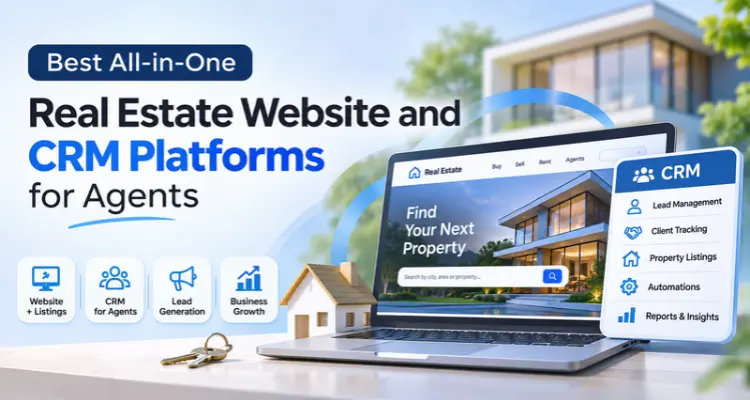
Managing a website, customer database, property listings, email campaigns, and enquiries through separate tools can become time-consuming. This is why all-in-one real estate websites and CRM platforms are becoming an important investment for agents, independent brokers, and growing real estate agencies.
These platforms bring website management, lead capture, contact management, marketing automation, and other essential business tools together in one place.
But with so many options available, which platform should you choose?
In this guide, we will explore some of the best all-in-one real estate websites and CRM platforms for agents, compare their features, discuss pricing considerations, and explain what to look for before making a decision.
What Is an All-in-One Real Estate Website and CRM Platform?
An all-in-one real estate website and CRM platform combines two essential tools that help agents manage their online presence and client relationships.
A real estate website acts as your digital storefront. It allows potential buyers and sellers to explore property listings, learn about your services, view neighbourhood information, and contact you.
A Customer Relationship Management (CRM) system helps you manage the people who visit your website or enquire about your services. It stores contact information, tracks enquiries, organises leads, and helps you follow up with potential clients.
When these two tools work together, agents can manage more of their business from a single system.
Main Features of an All-in-One Real Estate Platform
A good platform should offer features that support your daily business activities, including-
- Custom Real Estate Website- A professionally designed website that reflects your brand and services.
- IDX and MLS Integration- Allows visitors to search property listings directly on your website.
- Lead Capture Forms- Collects contact details from buyers, sellers, and other interested visitors.
- Built-In CRM– Organises contacts, enquiries, and potential customers.
- Automated Follow-Ups- Helps maintain communication through emails, text messages, and reminders.
- Property Listing Management- Makes it easier to display and manage property information.
- Marketing Automation- Supports email campaigns, newsletters, and social media activities.
- SEO-Friendly Website- Helps your website appear in relevant search results and attract organic traffic.
How Website and CRM Integration Helps Real Estate Agents
Imagine a potential buyer visits your website, searches for properties in a particular neighbourhood, and submits an enquiry.
If your website and CRM are connected, their information can be added to your contact database. You can then review the enquiry, understand their interests, and follow up with relevant property options.
Without integration, you may need to transfer information manually between different tools. This increases administrative work and creates opportunities for missed enquiries.
An integrated platform helps make the entire process more organised, from the first website visit to ongoing client communication.
10 Best All-in-One Real Estate Website and CRM Platforms for Agents
Choosing the right platform depends on your business size, lead generation strategy, website requirements, and budget. Some solutions focus on website development and IDX integration, while others offer advanced CRM automation and brokerage management.
Here are ten platforms worth considering.
1. DPI Showcase Websites – Best for Custom Real Estate Websites with Built-In CRM
DPI Showcase Websites provides real estate website solutions designed for agents and brokers who want to manage their online presence and client enquiries through one platform.
Unlike generic website templates, DPI focuses on real estate-specific website functionality, including IDX integration, property search, development pages, and built-in CRM tools.
Its website solutions allow agents to showcase their brand while giving visitors access to property listings directly from the website.
Main Features–
- Custom-designed real estate websites.
- Integrated IDX and MLS property search.
- Built-in CRM.AI for contact and lead management.
- New and existing development pages.
- Property floor plans and listing information.
- Automated saved-search emails.
- Email and text alerts.
- Automated blog publishing and social media posting.
- Mobile-responsive website designs.
- Website edits and personal training.
Pricing- DPI advertises website solutions starting at $69 per month. Its website and CRM bundle with Leads.AI is listed at $149 per month. Confirm the applicable package and included features before subscribing.
Best For- Independent real estate agents and brokers looking for a customised website with integrated IDX and CRM functionality without managing multiple separate tools.
Why Consider It? If your priority is building a branded real estate website that combines property search, lead management, and ongoing website support, DPI is worth evaluating.
2. Lofty
Lofty, formerly known as Chime, is a real estate technology platform offering website tools, CRM functionality, lead generation, and marketing automation.
It is designed to help agents manage leads and automate communication across different stages of the customer journey.
Main Features-
- Real estate website and IDX functionality.
- AI-assisted lead engagement.
- Contact and lead management.
- Automated email and text communication.
- Marketing campaigns.
- Lead tracking and reporting.
- Team management tools.
Pricing- Custom pricing depending on the selected package and business requirements.
Best For- Agents and teams looking for integrated marketing tools and AI-assisted lead nurturing.
3. BoldTrail
BoldTrail, previously associated with the kvCORE platform, provides technology solutions for real estate agents, teams, and brokerages.
It combines CRM, lead generation, website capabilities, marketing tools, and business management features.
Main Features-
- Real estate website functionality.
- Lead management and routing.
- Automated marketing campaigns.
- Lead nurturing workflows.
- Contact management.
- Reporting and performance tracking.
- Brokerage and team management.
Pricing- Custom pricing based on business size and selected features.
Best For- Established brokerages and larger real estate teams that require centralised lead management and marketing tools.
4. Sierra Interactive
Sierra Interactive offers real estate websites, IDX integration, CRM functionality, and lead generation tools.
It is particularly worth considering for businesses that want to attract visitors through organic search and paid advertising while managing enquiries through an integrated system.
Main Features-
- SEO-focused real estate websites.
- IDX property search.
- Lead management.
- Automated email and text follow-ups.
- Lead tracking and reporting.
- Marketing integrations.
- Team management features.
Pricing- Published Starter pricing was approximately $299.95 per month with annual upfront billing in September 2026. Check the current pricing before purchasing.
Best For- Agents and teams that prioritise website-led lead generation and search visibility.
5. Real Geeks
Real Geeks combines real estate website functionality with CRM and lead generation tools.
The platform helps agents capture enquiries from property searches and manage those leads through a centralised system.
Main Features-
- IDX-integrated websites.
- Property search functionality.
- Real estate CRM.
- Lead capture tools.
- Automated follow-up.
- Marketing and reporting features.
- Website customisation options.
Pricing- Third-party comparisons reported packages starting around $399 per month plus a setup fee. Confirm current pricing directly with the provider.
Best For- Solo agents and small teams looking for a combined website, CRM, and lead generation solution.
6. CINC
CINC focuses on helping real estate teams generate, capture, and manage online leads.
Its platform combines lead generation, CRM, automated follow-up, and website-related tools to support businesses that rely heavily on digital marketing.
Main Features-
- Lead generation tools.
- Real estate CRM.
- IDX website functionality.
- Automated lead nurturing.
- Lead distribution.
- Performance reporting.
- Marketing campaign management.
Pricing- Custom pricing based on the package and business requirements.
Best For- Real estate teams investing in paid online advertising and requiring structured lead management.
7. Follow Up Boss
Follow Up Boss is a real estate CRM designed to help agents and teams organise incoming leads and manage client communication.
Unlike complete website-and-CRM solutions, it is primarily a CRM platform. Agents generally connect it with their existing websites and lead generation sources.
Main Features-
- Centralised contact management.
- Lead distribution and routing.
- Automated follow-up.
- Email and text communication.
- Third-party integrations.
- Team performance tracking.
- Lead activity monitoring.
Pricing- Its Grow plan was listed at $69 per user per month when billed monthly in September 2026.
Sierra Interactive
Best For- Agents and teams that already have a website and want a dedicated CRM for managing enquiries and follow-ups.
8. Wise Agent
Wise Agent offers CRM and productivity tools designed specifically for real estate professionals.
It helps agents manage contacts, track transactions, organise tasks, and maintain communication with clients.
Main Features-
- Contact management.
- Transaction management.
- Email marketing.
- Automated follow-up.
- Task and appointment management.
- Lead organisation.
- Reporting tools.
Pricing- Third-party comparisons reported plans starting around $49 per month. Verify the latest plans with the provider.
Best For- Independent agents and smaller teams looking for essential CRM functionality without investing in a larger technology package.
9. Top Producer
Top Producer is a real estate CRM solution designed to help agents organise contacts, manage follow-ups, and maintain long-term client relationships.
It can be useful for agents who want to stay connected with previous clients, referrals, and prospective buyers.
Main Features-
- Contact and database management.
- Automated follow-up.
- Email marketing.
- Client communication tools.
- Transaction-related workflows.
- Lead organisation.
- Marketing automation.
Pricing- Depends on the selected plan and available features.
Best For- Agents who rely on referrals, repeat business, and consistent communication with their client database.
10. IXACT Contact
IXACT Contact is a real estate CRM platform that helps agents manage contacts and maintain regular communication with prospects and existing clients.
It focuses on making everyday relationship management and marketing activities easier.
Main Features-
- Contact management.
- Automated email campaigns.
- Client follow-up reminders.
- Marketing tools.
- Website-related features.
- Lead organisation.
- Database management.
Pricing- Varies by plan and selected features.
Best For- Individual agents and smaller real estate businesses that need straightforward CRM and marketing functionality.
Quick Comparison: Best Real Estate Website and CRM Platforms
Here is a quick comparison to help you shortlist the right platform based on your business requirements.
| Platform | Website & IDX | CRM | Best For |
| DPI Showcase Websites | Yes | Built-in | Custom websites and CRM |
| Lofty | Yes | Yes | AI-powered automation |
| BoldTrail | Yes | Yes | Brokerages |
| Sierra Interactive | Yes | Yes | SEO-focused websites |
| Real Geeks | Yes | Yes | Lead generation |
| CINC | Yes | Yes | Paid lead generation |
| Follow Up Boss | Through integrations | Yes | Lead management |
| Wise Agent | Limited website features | Yes | Budget-conscious agents |
| Top Producer | Website options | Yes | Client relationships |
| IXACT Contact | Website-related features | Yes | Simple CRM and marketing |
Features and integrations vary by subscription and provider. Confirm the exact capabilities available in your chosen plan.
Essential Features to Look for in a Real Estate Website and CRM Platform
Selecting a platform based only on its price or appearance can lead to problems later. Before investing, evaluate whether it supports the daily activities that help your real estate business grow.
Here are some important features to consider.
1. Custom Real Estate Website Design
Your website is often the first place potential clients interact with your business.
A professional real estate website should reflect your brand, communicate your services clearly, and make it easy for visitors to explore properties.
Look for-
- Customised website layouts.
- Professional property listing pages.
- Easy navigation.
- Mobile-friendly designs.
- Dedicated agent and team pages.
- Custom landing pages.
Avoid relying entirely on generic templates if building a distinctive brand is important to your business.
2. IDX and MLS Integration
IDX and MLS integration is particularly important for agents operating in markets where MLS-based property search is available.
It allows visitors to search available properties directly through your website instead of relying entirely on third-party property portals.
A good IDX-enabled website should support-
- Property search by location.
- Price and property-type filters.
- Property photos and descriptions.
- Listing updates through the MLS feed.
- Saved property searches.
- Property enquiry options.
This functionality can improve the visitor experience and encourage potential buyers to spend more time exploring your website.
3. Real Estate Lead Capture and Management
Getting visitors to your website is only one part of the process. You also need a reliable way to capture and manage their enquiries.
Look for platforms that offer-
- Property enquiry forms.
- Contact registration.
- Lead source tracking.
- Automatic CRM contact creation.
- Lead assignment.
- Enquiry notifications.
- Lead activity tracking.
These features help agents organise enquiries and respond before potential clients lose interest.
4. Automated Email and SMS Marketing
Following up with every prospect manually can become difficult, especially when managing multiple enquiries.
Marketing automation helps maintain communication without requiring agents to send every message individually.
Useful automation features include-
- Welcome emails for new enquiries.
- Property recommendation emails.
- Saved-search notifications.
- Follow-up reminders.
- Weekly property newsletters.
- Birthday and holiday messages.
- Long-term lead nurturing campaigns.
Automation should support personal communication rather than replace it entirely.
5. Website SEO and Mobile Optimization
A real estate website should not only look professional but also be discoverable through search engines.
When comparing platforms, check whether they support-
- Custom page titles and meta descriptions.
- SEO-friendly URLs.
- Fast-loading pages.
- Mobile-responsive layouts.
- Image optimization.
- XML sitemaps.
- Structured data where appropriate.
- Local landing pages for relevant neighbourhoods.
For example, an agent working in Miami could create useful pages targeting searches related to homes for sale in Miami, luxury properties in specific neighbourhoods, or local property developments.
High-quality local content combined with technically sound website development can support long-term organic visibility.
6. Reporting and Performance Tracking
You should be able to understand how your website and marketing activities are performing.
Look for reporting features that help you evaluate-
- Website traffic.
- Property listing views.
- New enquiries.
- Lead sources.
- Email campaign performance.
- Lead conversion rates.
- Agent response and follow-up activity.
These insights can help you identify which marketing channels are generating valuable prospects.
All-in-One Real Estate Platforms vs Separate Website and CRM Tools
Should you choose an all-in-one platform or purchase your website and CRM separately?
The answer depends on how your business operates, the tools you already use, and the level of customisation you need.
| Comparison Factor | All-in-One Platform | Separate Website and CRM |
| Setup | Usually simpler | Requires multiple setups |
| Data Management | More centralised | May require integrations |
| Lead Tracking | Often integrated | Depends on integration |
| Website Customisation | Depends on provider | More flexibility with suitable tools |
| Marketing Automation | Often included | May require additional tools |
| Monthly Costs | One bundled subscription or package | Multiple subscriptions |
| Maintenance | Fewer providers to coordinate | Multiple providers |
| Scalability | Depends on platform | Can choose tools independently |
Benefits of Using an All-in-One Platform
An integrated platform offers several practical advantages:
- Less administrative work- Manage website enquiries and contacts from a central system.
- Better lead organisation- Reduce manual data entry and disconnected contact records.
- Simplified follow-ups- Use automated reminders and communication workflows.
- Convenient website management- Manage property-related content and website functionality through one provider.
- More predictable technology costs- A bundled subscription can reduce the need for multiple separate services.
When Separate Website and CRM Tools Make Sense
Separate tools may be a better choice if you already have a high-performing website or require specialised CRM features.
For example, an established brokerage might prefer a custom-developed website connected to a dedicated CRM with advanced reporting and integrations.
However, before choosing this approach, consider integration costs, maintenance requirements, and the possibility of data syncing issues.
How Much Do Real Estate Websites and CRM Platforms Cost?
The cost of a real estate website and CRM platform depends on its features, number of users, integrations, and level of support.
Some providers offer affordable monthly subscriptions, while enterprise-level platforms may require customised packages.
Here are the main expenses to consider-
1. Monthly and Annual Subscription Costs
Most platforms charge recurring fees for website hosting, CRM access, automation, and other features.
Compare monthly and annual billing carefully. Also check whether the subscription includes all the tools you actually need.
2. Website Development and Setup Fees
Some providers include website design and setup in their packages, while others charge separately for custom development.
Ask whether your subscription includes:
- Initial website design.
- Custom branding.
- Domain configuration.
- IDX integration.
- Website hosting.
- Ongoing updates.
3. Additional Costs for IDX, MLS, and Integrations
MLS access and IDX services may involve additional fees depending on the market, MLS organisation, and provider.
Other potential expenses include:
- Premium CRM features.
- Additional user accounts.
- Email marketing services.
- SMS communication.
- Third-party integrations.
- Advertising and lead generation.
4. Free vs Paid Real Estate CRM and Website Solutions
Free CRM tools can be useful for agents who are just starting out. However, they may not provide the website integration, automated marketing, property search, and advanced lead management features required by a growing business.
A paid platform can offer better value when it reduces manual work and combines several essential services.
The important thing is to compare the total cost of ownership rather than choosing the platform with the lowest advertised monthly price.
How to Choose the Best Real Estate Website and CRM Platform for Your Business
The best platform is not necessarily the one with the most features. It is the one that supports your business goals without making everyday work more complicated.
Before making a decision, consider these factors.
1. Identify Your Website and Lead Generation Requirements
Think about how you currently attract potential clients.
Do you depend on Google searches, social media, paid advertising, referrals, or property portals?
Choose a platform that supports your primary lead generation channels and provides the website functionality you need.
2. Evaluate CRM and Automation Capabilities
A good CRM should make it easier to manage contacts, organise enquiries, and maintain communication.
Check whether the platform supports automated follow-ups, email campaigns, text alerts, and lead assignment.
3. Compare Pricing, Features, and Scalability
Look beyond the starting subscription price.
Consider additional charges for IDX, MLS access, extra users, integrations, and marketing services.
Also check whether the platform can support your business as you add more agents and expand into new markets.
4. Check Third-Party Integrations and Customer Support
Your platform should work smoothly with the other tools you use.
Check compatibility with:
- Google Analytics.
- Google Search Console.
- Email marketing services.
- Social media platforms.
- MLS and IDX providers.
- Lead generation tools.
Reliable customer support is equally important, particularly when you need website updates or technical assistance.
5. Consider SEO, Website Performance, and Customisation
A professional-looking website is important, but it should also be built to attract organic traffic.
Look for SEO-friendly website architecture, mobile optimisation, fast loading speeds, custom content pages, and the ability to target relevant local searches.
These features can help build your online presence over time.
Best Real Estate Website and CRM Platforms Based on Business Needs
Different real estate businesses have different requirements. Here is a quick recommendation based on common business scenarios.
| Business Requirement | Platforms Worth Considering |
| Independent agents | DPI Showcase Websites, Real Geeks |
| Custom real estate websites | DPI Showcase Websites, Sierra Interactive |
| Large real estate brokerages | BoldTrail, Lofty |
| SEO-focused lead generation | Sierra Interactive, DPI Showcase Websites |
| AI-powered lead nurturing | Lofty |
| Paid advertising and lead generation | CINC, Real Geeks |
| Dedicated lead management | Follow Up Boss |
| Budget-friendly CRM | Wise Agent |
| Referral and client relationship management | Top Producer, IXACT Contact |
The final choice should depend on your existing technology, budget, lead sources, and growth plans.
Why DPI Showcase Websites Is Worth Considering for Real Estate Agents
Choosing the right technology partner can make a significant difference in how efficiently you manage your real estate business.
If you want a website that does more than display your contact information and property listings, DPI Showcase Websites offers a combination of real estate website development, IDX integration, and built-in CRM functionality.
Here is what makes its offering worth exploring-
- Custom Website Designs
Your website should represent your business identity. DPI creates customised real estate websites rather than relying entirely on standard WordPress templates.
- Integrated IDX and MLS Search
Allow visitors to explore property listings directly through your website, helping create a more convenient property search experience.
Manage client contacts and enquiries through an integrated CRM instead of relying on a completely separate contact management system.
Features such as saved-search emails, newsletters, follow-up reminders, and automated social media posting can help maintain regular communication with potential clients.
Showcase property developments with relevant information, images, floor plans, and listing details.
- Ongoing Website Support
DPI also highlights personal website designers, website edits, and training support as part of its service offering.
If you are looking for a real estate website solution that brings website functionality and client management together, explore the available packages.
Explore DPI Showcase Websites– Discover real estate website and CRM solutions
Final Thoughts
Building a successful real estate business requires more than attractive property listings and a professional online presence. You also need the right systems to manage enquiries, communicate with potential buyers and sellers, and maintain long-term client relationships.
An all-in-one real estate website and CRM platform can simplify these activities by bringing website management, property search, lead capture, and customer management together.
Before choosing a solution, compare the available features, pricing, customisation options, SEO capabilities, and customer support.
If you are ready to build a professional online presence with integrated property search and client management tools, DPI Showcase Websites can help you create a real estate website designed around your business needs.
Frequently Asked Questions
1. What Is the Best All-in-One Real Estate Website and CRM Platform?
The best platform depends on your requirements. DPI Showcase Websites is worth considering for customised real estate websites with integrated IDX and CRM functionality. Other options include Lofty, BoldTrail, Sierra Interactive, and Real Geeks.
2. Do Real Estate Agents Need a Website and CRM Together?
Yes, combining a website and CRM can make lead management easier. Your website attracts visitors and collects enquiries, while the CRM helps organise contacts, track interactions, and manage follow-ups.
3. Which Real Estate CRM Offers Website Integration?
Several platforms offer website and CRM integration, including DPI Showcase Websites, Lofty, BoldTrail, Sierra Interactive, and Real Geeks. Dedicated CRMs such as Follow Up Boss can also connect with third-party websites.
4. Can Real Estate Agents Generate Leads Through Their Websites?
Yes. Agents can attract potential clients through SEO, local property content, IDX property searches, landing pages, contact forms, and digital advertising.
A well-designed website with useful information and clear enquiry options can support consistent lead generation.
5. Are All-in-One Real Estate Platforms Worth the Investment?
They can be worthwhile because they combine essential business tools and reduce the need to manage multiple subscriptions. However, compare the included features, support, integrations, and total costs before choosing one.
6. What Is the Most Affordable Real Estate Website and CRM Solution?
Pricing depends on the features you require. DPI Showcase Websites advertises website packages starting at $69 per month, while its website, CRM, and Leads.AI bundle is listed at $149 per month. Other platforms offer different pricing structures and packages. Always confirm current pricing with the provider.
7. What Is the Difference Between IDX and MLS Integration?
MLS (Multiple Listing Service) is a database used by real estate professionals to share property listing information. IDX (Internet Data Exchange) allows participating real estate professionals to display eligible MLS listings on their websites, subject to applicable rules and permissions.
8. Can I Use My Existing Domain Name With a Real Estate Website Platform?
Many real estate website providers allow agents to connect their existing domain names. Check the provider’s domain configuration and migration support before switching platforms.