
Imagine a potential buyer searching for a 3BHK apartment at midnight. They visit your website, explore available properties, check prices, and submit an enquiry. Instead of waiting until the next morning, they receive an instant response, and your sales team gets a notification about the new lead.
That’s what a well-designed real estate website that generates leads 24/7 can do.
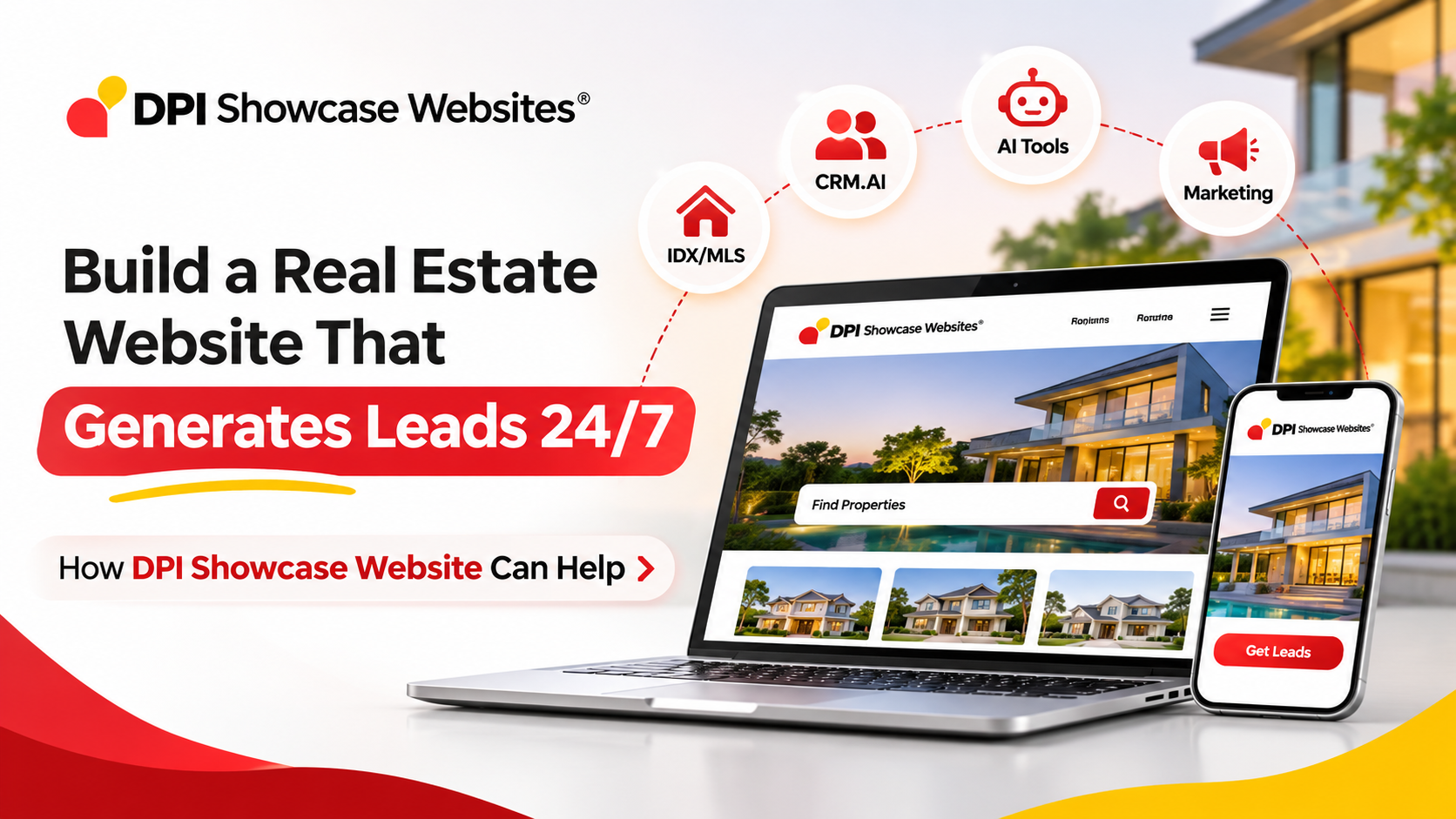
With modern technology, real estate agents, brokers, and property agencies can build websites that combine property listings, IDX integration, CRM systems, AI automation, and digital marketing tools.
A properly planned website can become your digital sales assistant, helping you attract qualified prospects and manage enquiries around the clock.
In this guide, we will explain how to build a real estate website that generates leads 24/7, which features you need, how AI automation can improve lead management, and why choosing the right real estate website development provider matters.
We will also explore how DPI Showcase Websites helps realtors and brokers build professional real estate websites with IDX websites, CRM, AI automation, and marketing tools.
Why Does Every Realtor and Broker Need a Lead-Generating Website?
Many real estate professionals depend on property portals, social media, referrals, and paid advertising to find potential buyers and sellers.
These channels can generate enquiries, but they do not always give you complete control over your customer journey.
A professional real estate website gives your business its own digital platform.
Here are some reasons why it matters.
1. Generate Property Leads Around the Clock
Property buyers do not search only during business hours. Some browse listings early in the morning, during lunch breaks, or late at night.
Your website should allow visitors to:
- Browse available properties.
- Search homes by location.
- Filter properties by price and type.
- View property photos and details.
- Request property information.
- Schedule a property viewing.
- Contact your real estate team.
With enquiry forms and automated responses, your website can capture potential leads even when you are unavailable.
2. Build Trust With Potential Buyers and Sellers
Buying or selling property is a major financial decision. People want to work with professionals they can trust.
A professional website helps establish credibility by showcasing:
- Your company profile.
- Agent and broker profiles.
- Property listings.
- Client testimonials.
- Recent sales and achievements.
- Contact information.
- Local market expertise.
A clean design and useful property information create a better first impression.
3. Get More Control Over Your Leads
When you depend entirely on third-party property portals, you have limited control over the customer experience.
Your own website allows you to collect enquiries directly and manage them through your CRM.
You can also create dedicated landing pages for different property types, locations, and services.
4. Reduce Manual Work Through Automation
A real estate business handles many repetitive tasks, such as responding to enquiries, sending property details, scheduling appointments, and following up with prospects.
AI automation and CRM integrations can reduce this manual workload.
For example, when someone requests information about a property, an automated workflow can acknowledge the enquiry, notify the agent, and organize the lead for follow-up.
This helps your team focus more on building relationships and closing deals.
How to Build a Real Estate Website That Generates Leads 24/7
Building a successful real estate website requires more than choosing a design and adding property listings. You need a complete system that attracts visitors, encourages enquiries, captures lead information, and helps your team follow up.
Here are the essential steps.
Step 1. Choose a Real Estate Website Builder Designed for Realtors
The first step is selecting a website builder that understands the needs of real estate professionals.
A general website builder may help you create a basic website, but real estate businesses need specialized features such as:
- IDX and MLS integration.
- Advanced property search.
- Property listing pages.
- Agent and broker profiles.
- Lead capture forms.
- CRM integration.
- Property alerts.
- AI-powered automation.
- Marketing and SEO tools.
Look for a platform that combines these features rather than requiring multiple disconnected services.
For example, DPI Showcase provides customized real estate IDX websites with MLS property search, built-in CRM.AI, lead generation tools, and marketing automation. Its platform is designed for both individual realtors and brokerage businesses.
Step 2. Integrate IDX and MLS Property Search
One of the most important features of a real estate website is property search.
Buyers visit real estate websites because they want to find properties that match their requirements.
IDX stands for Internet Data Exchange. It allows participating real estate professionals to display eligible MLS listings on their websites, subject to applicable MLS rules and permissions.
With IDX integration, visitors can search for properties without leaving your website.
Your property search should include:
- City and neighborhood filters.
- Property type selection.
- Minimum and maximum price.
- Number of bedrooms and bathrooms.
- Property size.
- Listing status.
- Property photos and descriptions.
- Saved searches and property alerts.
Why does this generate leads?
When buyers find relevant properties on your website, they have a reason to explore further, save listings, request information, or contact an agent.
DPI Showcase offers IDX websites that connect MLS property search with your own branded real estate website. Buyers can explore homes, condos, rentals, and commercial listings directly on your domain.
DPI Showcase Websites+1
Step 3. Create Dedicated Property Landing Pages
Not every visitor is looking for the same property.
Some want luxury homes, others are searching for apartments, investment properties, new developments, or rental homes.
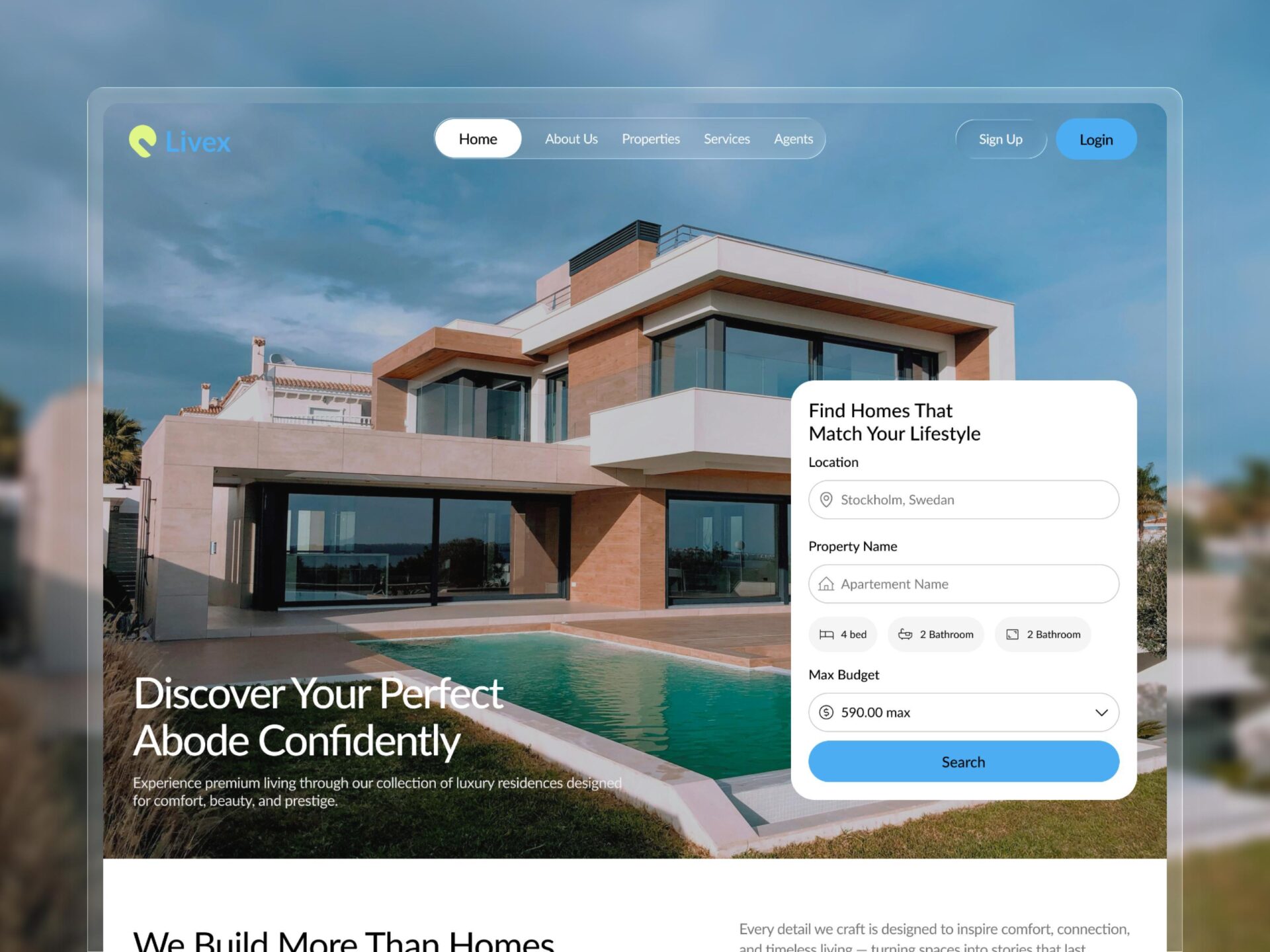
Creating dedicated landing pages helps you target different buyer interests.
For example:
- Homes for Sale in Miami.
- Luxury Properties in Palm Beach.
- New Construction Homes in Florida.
- Waterfront Condos for Sale.
- Commercial Properties for Investment.
- Homes for First-Time Buyers.
Each landing page should include:
- A clear and relevant headline.
- High-quality property images.
- Useful property information.
- Location-specific content.
- A simple enquiry form.
- A clear call to action.
- Agent contact details.
For example, instead of using a generic heading such as “Find Your Dream Home,” create a more targeted headline like “Explore Luxury Homes for Sale in Miami.”
This makes the page more relevant to the visitor’s search.
DPI Showcase offers pre-designed real estate landing pages to help agents and brokers encourage visitors to register and enquire about properties.
All-In-One Solution
Step 4. Add Smart Lead Capture Forms
A real estate website can receive traffic without generating enquiries if visitors do not know how to contact you.
This is why lead capture forms are important.
Place enquiry forms on property pages, landing pages, contact pages, and other important sections of your website.
Useful form fields include:
- Full name.
- Email address.
- Phone number.
- Preferred property location.
- Property type.
- Budget range.
- Buying or selling requirements.
- Preferred contact method.
Avoid asking too many questions in the first form. Start with essential information and collect additional details during follow-up.
Use clear CTAs such as:
- Schedule a Property Viewing.
- Request Property Details.
- Get the Latest Listings.
- Speak With a Local Realtor.
- Find Homes Within Your Budget.
The goal is to make it easy for visitors to take the next step.
Step 5. Integrate a Real Estate CRM
Getting leads is only half the job. Managing and following up with those leads is equally important.
Imagine receiving 30 property enquiries in one day. If you manage all these enquiries through spreadsheets or scattered email messages, some prospects may not receive timely responses.
A CRM (Customer Relationship Management) system helps you organize customer information and manage the sales process.
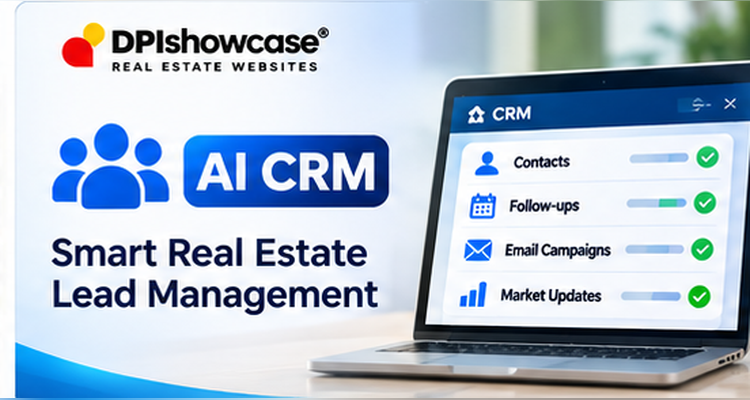
A real estate CRM should help you:
- Store buyer and seller information.
- Organize enquiries.
- Track property interests.
- Monitor customer activity.
- Assign leads to agents.
- Schedule follow-up reminders.
- Manage communication history.
- Identify active prospects.
Why is CRM integration important?
It helps prevent enquiries from getting lost and gives your team a clear view of every potential customer.
DPI Showcase offers its built-in CRM.AI with its real estate websites. According to its website, the system can automatically add clients, send email and text alerts, manage saved-search emails, send nurturing emails, and provide follow-up reminders.
All-In-One Solution+1
Step 6. Use AI Automation to Respond to Leads Faster
AI automation is changing how real estate professionals manage customer enquiries.
Instead of handling every initial interaction manually, you can use AI-powered tools to collect prospect information, answer common questions, and organize leads for follow-up.
For example, a potential buyer visits your website and asks:
“I am looking for a 3-bedroom home in Miami with a budget of $600,000.”
An AI chatbot can collect the visitor’s contact information and property preferences, then help direct the enquiry to the right agent.
Here are some useful AI automation features for real estate websites.
- AI-Powered Chatbot
An AI chatbot can interact with website visitors, answer common questions, collect contact details, and help prospects take the next step.
- Automated Lead Follow-Up
After someone submits an enquiry, an automated workflow can send an acknowledgement and notify the assigned agent.
- AI Lead Management
AI-powered CRM tools can help organize prospects and provide information that makes follow-up easier.
- Automated Property Alerts
When buyers save searches, the system can send relevant property updates according to their preferences.
- Automated Email Communication
Businesses can use automated emails to share property information, newsletters, market updates, and follow-up messages.
DPI Showcase offers several AI tools, including an AI-powered chatbot that collects prospect information, sends details to agents, adds prospects to the CRM, sets up listing alerts, and can automatically book appointments on the agent’s calendar.
DPI Showcase Websites
Step 7. Optimize Your Real Estate Website for SEO
A beautiful real estate website will not generate consistent organic traffic if people cannot find it through search engines.
Search Engine Optimization (SEO) helps your website appear when potential buyers and sellers search for real estate services, properties, and local market information.
For example, a real estate agent in Miami may target keywords such as:
- Homes for Sale in Miami.
- Miami Real Estate Agent.
- Luxury Homes in Miami.
- Condos for Sale in Miami.
- Best Realtor in Miami.
- Miami Property Listings.
Here are some important real estate SEO practices.
Optimize Property Pages
Give every important property page a unique title, description, relevant content, and useful images.
Create Location-Specific Pages
Develop useful pages for the cities, neighborhoods, and property markets you serve.
Publish Real Estate Blogs
Write helpful articles about local property trends, buying guides, selling tips, mortgage information, and neighborhood insights.
Improve Website Speed
Optimize images, reduce unnecessary scripts, and make sure your website loads efficiently.
Use Structured Data
Implement appropriate structured data where eligible, such as Organization, LocalBusiness, and relevant property-related markup. Always follow search engine guidelines.
Make Your Website Mobile-Friendly
Many people browse property listings on smartphones. Your website should work smoothly on mobile devices.
DPI Showcase includes SEO-friendly website features and automated blogging tools that support real estate content publishing and social distribution.
All-In-One Solution+1
Step 8. Automate Social Media Marketing
Your website should not depend only on Google traffic.
Social media can also help you attract potential buyers and sellers.
Real estate agents can share:
- New property listings.
- Property walkthrough videos.
- Client testimonials.
- Market updates.
- Neighborhood guides.
- Buying and selling tips.
- New construction projects.
The important part is connecting your social media content to your website.
For example, when you share a property listing on Facebook, include a link that directs visitors to the complete listing on your website.
DPI Showcase offers automated posting features for Facebook and LinkedIn. Its website states that participating IDX websites can automatically publish a property listing each day, linking visitors back to the relevant property page. It also supports automatic blog and social media posting.
All-In-One Solution
Step 9. Add Automated Email Marketing
Email marketing helps real estate professionals stay connected with potential buyers and sellers.
Not every visitor will be ready to purchase a property immediately. Some may take weeks or months to make a decision.
Automated email marketing helps you stay in touch during this period.
You can create email campaigns for:
- New property listings.
- Saved property search alerts.
- Weekly property updates.
- Local real estate market reports.
- New development announcements.
- Home-buying tips.
- Seller marketing information.
- Customer newsletters.
For example, someone who subscribes to your website for Miami property updates can receive relevant property information through an automated email sequence.
DPI Showcase offers automated saved-search emails, weekly eNewsletters, holiday emails, and nurturing emails through its CRM.AI platform. Its website also describes automatically distributing weekly blog content through email newsletters.
All-In-One Solution+1
Step 10. Track Website Performance and Lead Conversions
Once your website is live, you need to understand how visitors interact with it.
Tracking helps you identify which pages attract visitors, which property listings receive enquiries, and which marketing channels generate leads.
Monitor these important metrics:
| Metric | What It Tells You |
| Website Traffic | Number of visitors coming to your website |
| Property Page Views | Which listings attract attention |
| Enquiry Forms | Number of submitted enquiries |
| Lead Conversion Rate | Percentage of visitors who become leads |
| Phone Clicks | Visitors interested in calling your team |
| Appointment Requests | Prospects requesting property viewings |
| Organic Traffic | Visitors coming from search engines |
| Cost Per Lead | Marketing cost for each generated lead |
You can use Google Analytics 4, Google Search Console, and CRM reporting to understand website performance.
Review these numbers regularly and improve the pages, forms, and campaigns that need attention.
How DPI Showcase Helps Realtors Build Lead-Generating Real Estate Websites
Building a real estate website with IDX integration, CRM, AI automation, and marketing tools can require multiple software providers.
Managing different platforms can increase costs and make your workflow more complicated.
This is where DPI Showcase stands out as a real estate website builder and technology provider for realtors and brokers.

Website: DPI Showcase Websites
DPI Showcase provides an integrated platform that brings together real estate website development, MLS integration, CRM, AI tools, and marketing automation.
Instead of using separate tools for property search, customer management, and marketing, real estate professionals can manage several important activities through one platform.
1. Custom IDX Websites for Realtors and Brokers
DPI Showcase creates customized real estate websites designed around an agent’s or brokerage’s brand.
Its IDX websites allow visitors to search MLS listings directly on the website.
Important features include:
- Customized website designs.
- MLS and IDX property integration.
- Property search and filters.
- Mobile-responsive layouts.
- Property photos and details.
- New development pages.
- Floor plans.
- Saved property searches.
This helps real estate professionals provide buyers with a convenient property search experience while keeping their brand at the center.
2. Built-In CRM for Lead Management
DPI Showcase includes its own CRM AI system with its real estate website solution.
It helps realtors and brokers organize customer information and manage follow-up activities.
Its features include:
- Automatic client registration.
- Email and text alerts.
- Saved-search emails.
- Customer nurturing emails.
- Search activity alerts.
- Follow-up reminders.
- Weekly newsletters.
This integration helps agents manage customer enquiries without depending entirely on a separate CRM platform.
3. AI-Powered Chatbot for Automatic Lead Capture
DPI Showcase also provides an AI-powered chatbot designed to collect information from website visitors.
According to its official AI tools page, the chatbot can:
- Collect prospect information.
- Send lead details through email and text.
- Add prospects to the CRM automatically.
- Set up new listing alerts.
- Send branded emails.
- Book appointments on an agent’s calendar.
This can help real estate professionals capture enquiries and organize prospect information even outside regular business hours.
4. Leads.AI for Finding Potential Sellers
Finding potential property sellers is another important part of real estate lead generation.
DPI Showcase offers Leads.AI, a collection of AI-powered tools designed to help identify potential sellers and support automated outreach.
This can help agents discover opportunities and organize prospects for personal follow-up.
5. AI Blogging and SEO Automation
Publishing useful content regularly can help real estate websites build organic visibility.
However, many agents do not have enough time to research, write, and publish blog articles.
DPI Showcase offers AI blogging features that automatically publish real estate-related articles customized around a city or ZIP code.
Its content distribution workflow also supports automatic sharing on Facebook and LinkedIn, along with weekly email newsletters.
This helps real estate professionals maintain an active online presence with less manual work.
6. Automatic Social Media Posting
DPI Showcase offers automatic property listing posts on Facebook and LinkedIn.
These posts include property images and descriptions and link visitors back to the relevant listing on the agent’s website.
It also supports automatic blog sharing.
This creates another way to bring social media visitors to your website and encourage property enquiries.
7. Personal Website Support and Training
A real estate website needs regular updates.
Agents may need to add new pages, change property information, update images, or make design adjustments.
DPI Showcase provides personal web designer support, website edits, and training to help clients manage their websites.
These services are included in its advertised website packages.
What Makes DPI Showcase a Good Choice for Real Estate Website Development?
If you are searching for a real estate website builder for realtors and brokers, DPI Showcase is worth considering because it combines several essential business tools.
Here is a quick overview:
| Business Requirement | DPI Showcase Solution |
| Professional Website | Custom IDX Website |
| Property Search | MLS Integration |
| Lead Management | Built-In CRM.AI |
| Lead Generation | Leads.AI |
| Customer Communication | AI Chatbot and Automated Emails |
| SEO Content | AI Blogging |
| Social Media Marketing | Automatic Facebook and LinkedIn Posting |
| Customer Follow-Up | Automated CRM Workflows |
| Property Marketing | Dedicated Development Pages |
| Website Management | Personal Support and Training |
Unlike a basic website builder, DPI Showcase focuses on the specific requirements of real estate professionals.
For individual agents, it provides tools to establish a professional online presence. For brokers, it offers brokerage website solutions and additional agent-site options.
If you want a real estate website with IDX, CRM, AI automation, and marketing tools in one place, DPI Showcase is a strong provider to evaluate.
Explore its solutions: Visit DPI Showcase Websites.
Conclusion: Build a Real Estate Website That Works for You 24/7
A real estate website should be more than an online business card. It should be an important part of your lead generation and sales process.
With the right combination of IDX property search, landing pages, SEO, CRM, AI chatbots, automated follow-ups, and social media marketing, realtors and brokers can create a more effective online presence.
You do not need to manage every activity manually. The right technology can help you attract visitors, capture enquiries, organize prospects, and maintain communication even outside office hours.
DPI Showcase brings these essential real estate website and marketing tools together in one platform. From customized IDX websites and built-in CRM.AI to AI-powered chatbots, Leads.AI, automatic blogging, and social media posting, it provides solutions designed around the needs of modern real estate professionals.
If you are ready to build a professional real estate website that supports your business growth, explore DPI Showcase.
Build your real estate website. Automate your marketing. Capture more opportunities.
Frequently Asked Questions (FAQs)
1. How do I build a real estate website that generates leads?
Start with a professional real estate website builder that offers IDX integration, property search, lead capture forms, CRM, SEO, and automation. Add location-specific landing pages, useful property content, and clear contact options to encourage visitors to enquire.
2. What is the best real estate website builder for realtors?
DPI Showcase is a strong option for realtors looking for customized IDX websites, MLS integration, built-in CRM.AI, AI-powered lead generation, and marketing automation. It combines several real estate business tools in one platform.
3. What is an IDX real estate website?
An IDX real estate website allows realtors and brokers to display eligible MLS property listings on their own websites. Visitors can search properties, view listing details, and contact the agent without needing to leave the website.
4. How can AI automation help real estate agents generate leads?
AI automation can help real estate agents collect prospect information, respond to common enquiries, organize leads, send property alerts, and manage follow-up communication. This reduces repetitive work and helps agents stay connected with potential buyers and sellers.
5. Can a real estate website generate leads while I am sleeping?
Yes. A website with property search, enquiry forms, AI chatbots, and automated CRM workflows can collect and organize leads at any time. However, personal conversations, property viewings, and sales negotiations may still require an agent.
6. Why do real estate agents need a CRM?
A CRM helps real estate agents organize buyer and seller information, track enquiries, manage follow-ups, and maintain communication history. It reduces the chances of losing track of potential customers.
7. How much does a real estate website cost?
The cost depends on website design, IDX integration, MLS fees, CRM functionality, customization, and ongoing support. DPI Showcase currently advertises its website and CRM packages starting at $69 per month. Additional MLS or third-party charges should be checked before signing up.
8. Is DPI Showcase suitable for real estate brokers?
Yes. DPI Showcase offers solutions for individual realtors and broker owners, including IDX websites, built-in CRM.AI, lead management, customized designs, and additional agent-site options.
9. How can I get more traffic to my real estate website?
Focus on local SEO, property-specific landing pages, neighborhood guides, helpful blogs, social media marketing, Google Business Profile optimization, and targeted advertising. Publish useful content that matches what buyers and sellers are searching for.
10. What features should a modern real estate website have?
A modern real estate website should include IDX and MLS integration, advanced property search, mobile-friendly design, property pages, lead capture forms, CRM, AI chatbot, email automation, SEO-friendly content, and analytics.